Choosing a mobile app development company comes down to finding a long-term technical partner rather than just hiring code-writers. A bad development choice leads to missed deadlines, bloated budgets, and buggy apps that users abandon after day one.
Whether you are a founder building a startup MVP or an enterprise modernizing internal software, evaluate potential development partners against these 10 real-world criteria before signing a contract.
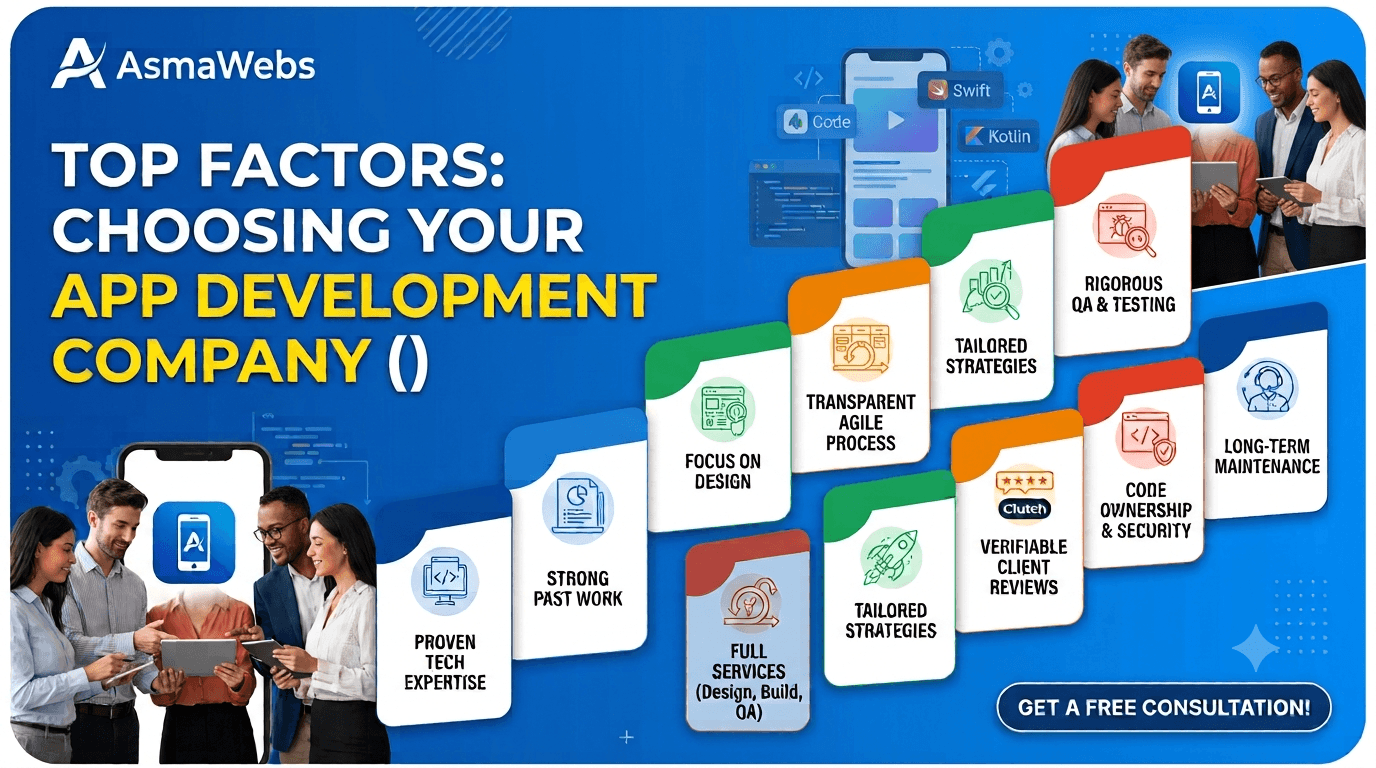
1. Proof of Experience in Native and Cross-Platform Technologies
Your app's performance, development timeline, and budget depend on choosing the right tech stack—and finding a team that actually specializes in it. Avoid agencies that force every client into a single framework just because it's the only one their developers know.
Look for a team with verified experience across the core development paths:
Native Android App Development: Mastery of Kotlin, Android Studio, and Google Play Store release guidelines.
Native iOS App Development: Expertise in Swift, SwiftUI, and strict Apple Human Interface Guidelines.
Cross-Platform Mobile App Development: Strong portfolio in Flutter or React Native for launching on iOS and Android simultaneously with a shared codebase.
2. A Proven Track Record and Verifiable Portfolio
Don't evaluate an app agency by its sales deck—evaluate it by its live products. Ask the team to walk you through applications they built that are currently live in the App Store or Google Play Store.
During your evaluation, check:
Real User Ratings: Read recent user reviews in the app stores to spot recurring performance issues or crashes.
Technical Complexity: Have they successfully integrated features similar to what you need (e.g., real-time GPS tracking, biometric authentication, or complex payment gateways)?
Industry Experience: Have they built products for your specific industry or target audience?
3. Dedicated Mobile App UI/UX Design Capabilities
Great code won't save an app if the user interface is frustrating or hard to navigate. High-performing agencies treat design as an essential engineering step, not an afterthought.
A strong mobile app UI/UX design service process includes:
Detailed user persona mapping and journey flows
Interactive wireframes and clickable prototypes prior to coding
In-app usability testing to ensure navigation feels natural on small screens
4. End-to-End Custom App Development Services
Building an app is a multi-stage project. Managing multiple vendors for design, backend engineering, testing, and deployment creates communication bottlenecks and split accountability.
Partner with an agency offering full-lifecycle custom mobile app development services, covering:
Product discovery and technical scope definition
Custom frontend and scalable backend architecture
Third-party API and database integrations
Quality assurance and security auditing
App Store Submission and post-launch support
5. Transparent Agile Development Workflows
Development delay is one of the biggest risks in software projects. Agencies using Agile methodologies deliver software in 2-to-3 week sprints, giving you full visibility into progress and allowing quick pivots when business requirements change.
Before hiring an agency, ask:
Will I have direct access to your project management tools (e.g., Jira or Trello)?
How frequently will we do live demo calls?
What is your explicit process for scope changes or feature add-ons?
6. Rigorous Mobile Application Testing & QA Protocols
Releasing an app full of bugs causes bad initial reviews that can permanently suppress your app store ranking. Never work with a firm that relies solely on developers to test their own code.
Ensure the company employs dedicated QA engineers who perform:
Device Testing: Testing across multiple screen sizes, OS versions, and hardware specifications.
Performance Testing: Measuring app load speeds, battery drain, and server responses under heavy usage.
Security Auditing: Verifying end-to-end data encryption, secure API connections, and OWASP compliance.
7. Tailored Strategies for Startups vs. Enterprises
A startup building its first app needs a completely different approach than a corporate brand integrating mobile apps into an existing ERP.
Make sure the agency adapts its approach to your scale:
Startup Mobile App Development: Prioritizes speed-to-market, cost control, and building a lean Minimum Viable Product (MVP) to validate market demand.
Enterprise Mobile App Development: Demands strict data privacy protocols, multi-layer permissions, legacy system integration, and dedicated server environments.
If you already have an internal tech team, ask if you can hire dedicated mobile app developers on a staff augmentation basis to fill specific skill gaps.
8. Unbiased Client Reviews and Reference Checks
Case studies on an agency’s website only tell the positive side of the story. To get an honest picture of what it’s like to work with them, look for independent third-party feedback.
Check verified reviews on platform sites like Clutch and GoodFirms. When possible, ask the agency to connect you directly with 2 or 3 recent clients. Ask those past clients:
Did the project stay close to the original budget?
How did the team handle unexpected technical hurdles?
Did they meet their promised launch deadlines?
9. Strict Intellectual Property (IP) Rights & Security Legalities
Your custom software code, database architecture, and business logic are valuable proprietary assets. Protect your business legally before sharing detailed specs or wireframes.
Non-Disclosure Agreement (NDA): Execute a mutual NDA prior to sharing sensitive details.
100% Code Ownership: Ensure your contract explicitly states that all custom source code, design assets, and intellectual property belong to you upon final payment.
Regulatory Compliance: Verify their knowledge of data protection frameworks relevant to your industry (e.g., GDPR, HIPAA, or PCI-DSS).
10. Clear Post-Launch Maintenance & SLA Agreements
An app is never truly "finished." Mobile operating systems update constantly, third-party APIs change, and user growth requires ongoing server tuning.
A reliable custom app development partner provides structured post-launch Service Level Agreements (SLAs). This guarantees immediate access to developers for emergency bug fixes, OS compatibility updates, and future feature rollouts.
Frequently Asked Questions
Should I choose native or cross-platform app development?
Choose native development (Swift/Kotlin) if your app relies heavily on complex device hardware, hardware acceleration, or maximum graphical performance. Choose cross-platform development (Flutter/React Native) if you want to launch on both iOS and Android quickly while saving up to 30–40% on overall development costs.
How long does it take to develop a custom mobile application?
An average mobile app project takes between 3 to 6 months from initial discovery to app store launch, depending on scope, feature complexity, and the speed of feedback rounds during design and testing.