How to Build a Technology Roadmap for 2027: A Complete Guide for Businesses
Introduction
Technology is evolving faster than ever, and businesses must continuously adapt to remain competitive in the digital marketplace. From Artificial Intelligence (AI) and automation to cloud computing, cybersecurity, and advanced software solutions, emerging technologies are changing how organization operate, serve customers, and manage business processes.
As 2027 approaches, having a clear technology roadmap is becoming essential for businesses that want to improve operational efficiency, reduce costs, strengthen security, and achieve sustainable digital growth.
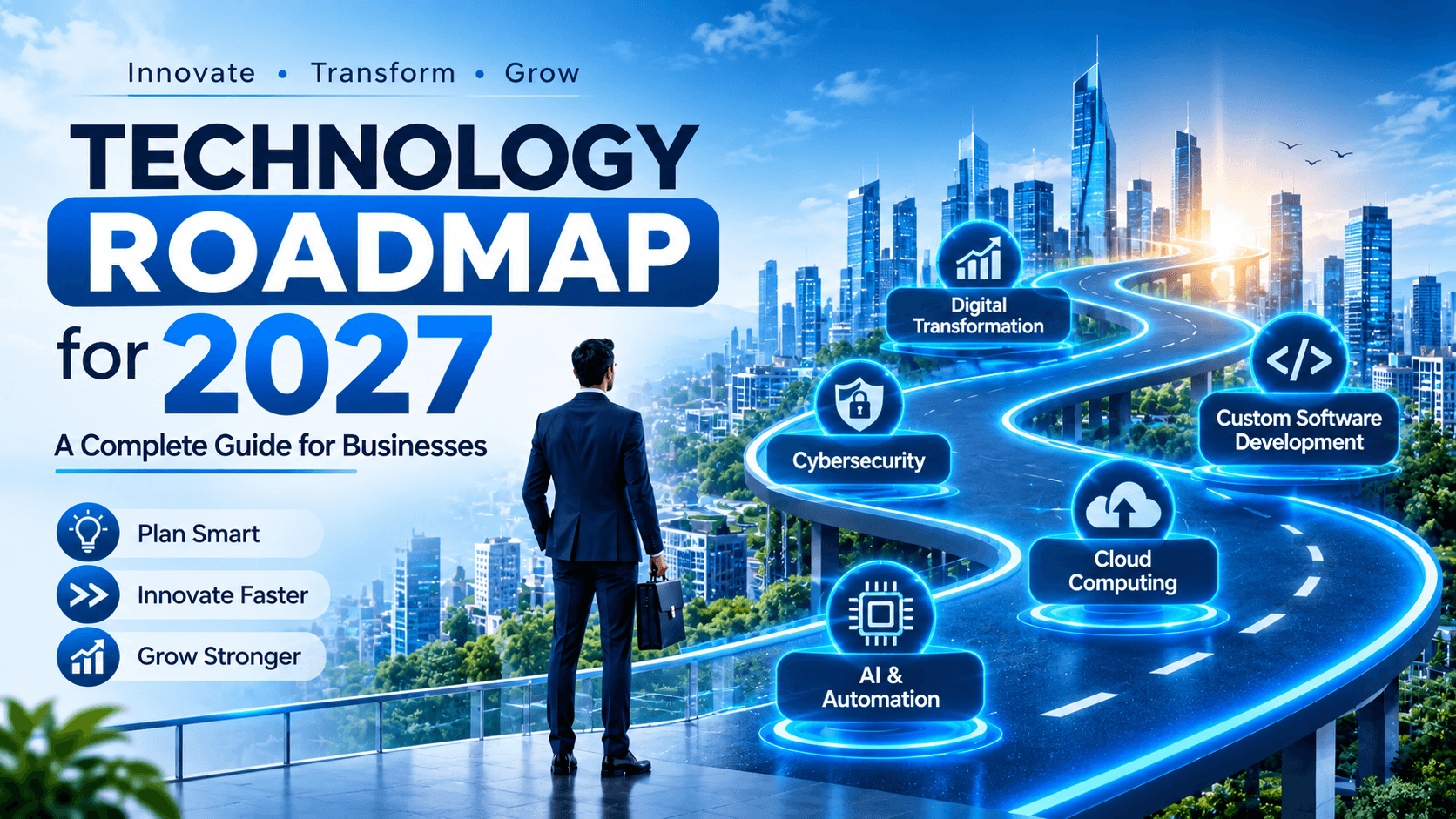
A Technology Roadmap for 2027 is a strategic plan that outlines how an organization will adopt, implement, upgrade, and manage technology to achieve its short-term and long-term business objectives.
What Is a Technology Roadmap?
A technology roadmap is a structured plan that connects business objectives with technology investments and implementation strategies.
It helps organizations understand:
- Which technologies they need to adopt.
- What existing systems require upgrades.
- How to manage digital transformation.
- Where to invest technology budgets.
- How to improve business productivity.
- What cybersecurity measures are required.
Rather than adopting every new technology, businesses can use a roadmap to prioritize solutions that create real business value.
Why Do Businesses Need a Technology Roadmap in 2027?
The business environment is becoming increasingly dependent on digital infrastructure. Companies that fail to modernize their technology may face operational challenges, security vulnerabilities, and difficulties meeting customer expectations.
Here are some major reasons why technology planning matters in 2027.
1. Faster Digital Transformation
Businesses are moving from traditional operations toward digital-first business models. Modern websites, mobile applications, cloud platforms, and enterprise software help organizations streamline workflows and improve customer experiences.
2. Better Operational Efficiency
Automation and intelligent software solutions can reduce repetitive manual tasks, minimize errors, and improve productivity across departments.
3. Stronger Cybersecurity
As businesses become more digitally connected, protecting sensitive information is increasingly important. A technology roadmap helps organizations plan security upgrades, access controls, data protection, and risk management.
4. Improved Customer Experience
Modern customers expect fast, personalized, and convenient digital experiences. Businesses can use technology to improve communication, simplify transactions, and deliver better services.
5. Smarter Technology Investments
A structured roadmap helps companies avoid unnecessary software purchases and focus on technology investments that support measurable business goals.
Latest Technology Trends Businesses Should Consider for 2027
Technology planning for 2027 should focus on solutions that offer long-term flexibility, scalability, and business value.
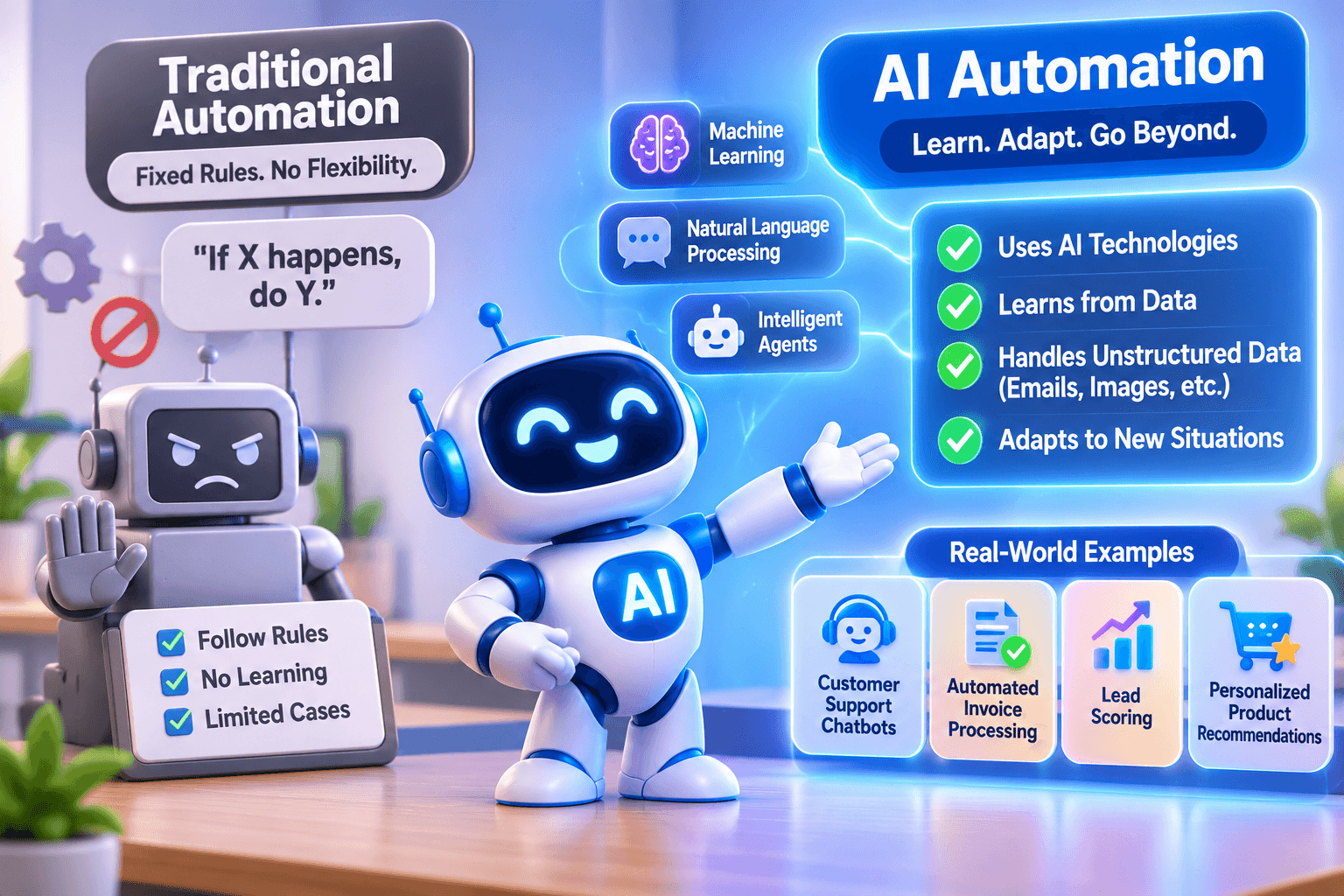
1. Artificial Intelligence and AI Automation
Artificial Intelligence is becoming an important part of modern business operations. Companies are using AI-powered tools for customer support, data analysis, content workflows, predictive insights, and process automation.
In 2027, businesses should explore practical AI applications that solve specific operational problems rather than adopting AI simply because it is trending.
2. Cloud Computing and Infrastructure Modernization
Cloud computing allows businesses to access applications, storage, and computing resources without depending entirely on traditional physical infrastructure.
Organizations should evaluate cloud migration, hybrid cloud environments, backup systems, and infrastructure scalability to support future growth.
3. Cybersecurity and Data Protection
Cybersecurity should be a core part of every technology roadmap. Businesses need to protect their websites, applications, databases, and internal systems against evolving digital threats.
Important priorities include multi-factor authentication, regular security audits, encryption, secure backups, and vulnerability management.
4. Custom Software and Business Automation
Every business has unique operational requirements. Custom software development helps organizations build solutions that match their specific workflows.
Businesses can invest in custom web applications, automated reporting systems, CRM platforms, ERP software, and API integrations to improve operational performance.
5. Mobile Applications and Responsive Web Experiences
Mobile accessibility is essential for modern businesses. Companies should ensure that their websites and applications provide seamless experiences across smartphones, tablets, and desktop devices.
Progressive Web Apps, mobile applications, and responsive website development can help businesses improve customer engagement and accessibility.
6. Data Analytics and Business Intelligence
Data-driven decisions are becoming increasingly important. Business intelligence platforms help organizations analyze performance, understand customer behavior, identify operational challenges, and discover new growth opportunities.
Investing in reliable data infrastructure and analytics tools can support better strategic planning.
7 Essential Steps to Build a Technology Roadmap for 2027
Creating an effective roadmap requires more than selecting new software or upgrading existing systems. Businesses need a structured approach.
Step 1: Evaluate Your Current Technology Infrastructure
Start by reviewing your existing technology environment.
Analyze your website, software applications, databases, cloud infrastructure, cybersecurity systems, and internal business tools.
Identify outdated technologies, performance issues, security gaps, and processes that require automation.
Goal: Understand your current technology position before planning future improvements.
Step 2: Define Clear Business and Technology Goals
Every technology investment should support a specific business objective.
For example:
- Improve website performance and user experience.
- Automate repetitive business operations.
- Increase customer engagement.
- Strengthen data security.
- Improve internal communication.
- Develop scalable digital products.
Set measurable objectives so that progress can be evaluated throughout the year.
Step 3: Identify the Right Technologies
Not every emerging technology is suitable for every business.
Evaluate potential solutions based on business requirements, implementation costs, scalability, security, and expected return on investment.
Prioritize technologies that solve existing problems and support long-term organizational growth.
Step 4: Create a Realistic Technology Budget
Technology planning requires proper financial management.
Your budget should consider software development, cloud subscriptions, infrastructure upgrades, cybersecurity, maintenance, employee training, and technical support.
It is also important to keep a contingency budget for unexpected upgrades and emerging requirements.
Step 5: Develop an Implementation Timeline
Divide your technology roadmap into manageable phases instead of implementing everything simultaneously.
Suggested 2027 Technology Roadmap:
| Timeline | Key Technology Priorities |
|---|---|
| Q1 2027 | Technology audit, business requirements, cybersecurity assessment |
| Q2 2027 | Cloud modernization, website upgrades, software development |
| Q3 2027 | AI integration, automation, data analytics |
| Q4 2027 | Performance optimization, security reviews, future planning |
This timeline can be adjusted according to business size, available resources, and implementation priorities.
Step 6: Focus on Cybersecurity and Scalability
Security and scalability should be considered from the beginning of every technology project.
Implement secure development practices, regular backups, access management, software updates, and monitoring systems.
Choose technologies that can accommodate increasing users, data volumes, and business requirements without requiring frequent infrastructure replacement.
Step 7: Monitor Performance and Optimize Continuously
A technology roadmap should not remain a fixed document.
Review project progress regularly and measure results through relevant KPIs, such as:
- Website loading speed.
- Application performance.
- Operational cost reduction.
- Customer satisfaction.
- Automation efficiency.
- System uptime.
- Security incident frequency.
Use these insights to improve your technology strategy throughout 2027.
Common Technology Roadmap Mistakes Businesses Should Avoid
Even well-planned technology initiatives can fail when organizations overlook important considerations.
Here are some common mistakes to avoid:
1. Following Every Technology Trend: Adopting technologies without understanding their business value can increase costs without delivering meaningful results.
2. Ignoring Cybersecurity: Security should be integrated into every stage of technology planning, not treated as a final implementation step.
3. Underestimating Development Costs: Software development, integration, maintenance, and upgrades should all be included in the budget.
4. Lack of Employee Training: Employees need proper guidance to use new software and digital tools effectively.
5. No Performance Measurement: Without clear KPIs, businesses may struggle to understand whether their technology investments are delivering expected results.
How the Right Technology Partner Can Help
Building and implementing a technology roadmap requires technical expertise, strategic planning, and continuous support.
Working with an experienced IT solutions partner can help businesses identify suitable technologies, develop customized software, modernize existing infrastructure, and implement digital transformation initiatives.
At AsmaWebs, we help businesses transform their ideas into practical digital solutions through:
- Website and Mobile App Development
- Custom Software Development
- UI/UX Design
- E-commerce Platform Development
- Cloud Solutions and DevOps
- API Integration and Automation
- SaaS and ERP Development
- AI, ML and Chatbot Integration
- IT Consulting and Digital Transformation
Whether you are planning to launch a new digital product, upgrade existing business software, or automate your operations, choosing the right technology strategy can help build a stronger digital foundation for the future.
Conclusion
A successful technology roadmap for 2027 is not about adopting every new innovation. It is about choosing the right technologies, setting clear priorities, managing investments, and aligning digital initiatives with business objectives.
From AI integration and cloud computing to cybersecurity and custom software development, businesses need a structured approach to remain adaptable in an increasingly digital environment.
Start evaluating your existing infrastructure, identify opportunities for improvement, and create a practical implementation plan.
The right technology roadmap today can build a smarter, more scalable, and more competitive business tomorrow.
Frequently Asked Questions (FAQs)
1. What is a technology roadmap for 2027?
A technology roadmap for 2027 is a strategic plan that outlines the technologies, software upgrades, digital initiatives, and IT investments a business needs to achieve its future objectives.
2. Which technologies should businesses prioritize in 2027?
Businesses should evaluate AI, automation, cloud computing, cybersecurity, custom software, mobile applications, and data analytics based on their individual requirements.
3. How often should a technology roadmap be updated?
Businesses should review their roadmap quarterly and update it whenever business priorities, security requirements, or technology needs change.
4. Why is custom software development important for business growth?
Custom software helps businesses automate specific workflows, improve operational efficiency, integrate existing systems, and develop solutions that match their unique requirements.
5. Can small businesses create a technology roadmap?
Yes. Small businesses can start with essential improvements such as website development, cloud-based tools, cybersecurity, workflow automation, and customer management software.
6. How can AsmaWebs help businesses with digital transformation?
AsmaWebs provides website and mobile app development, custom software, ERP solutions, cloud services, API integration, AI integration, and IT consulting to support business digital transformation.